Why Your Tomatoes Are All Flowers and No Fruit: This Week's Heat-Pollination Math
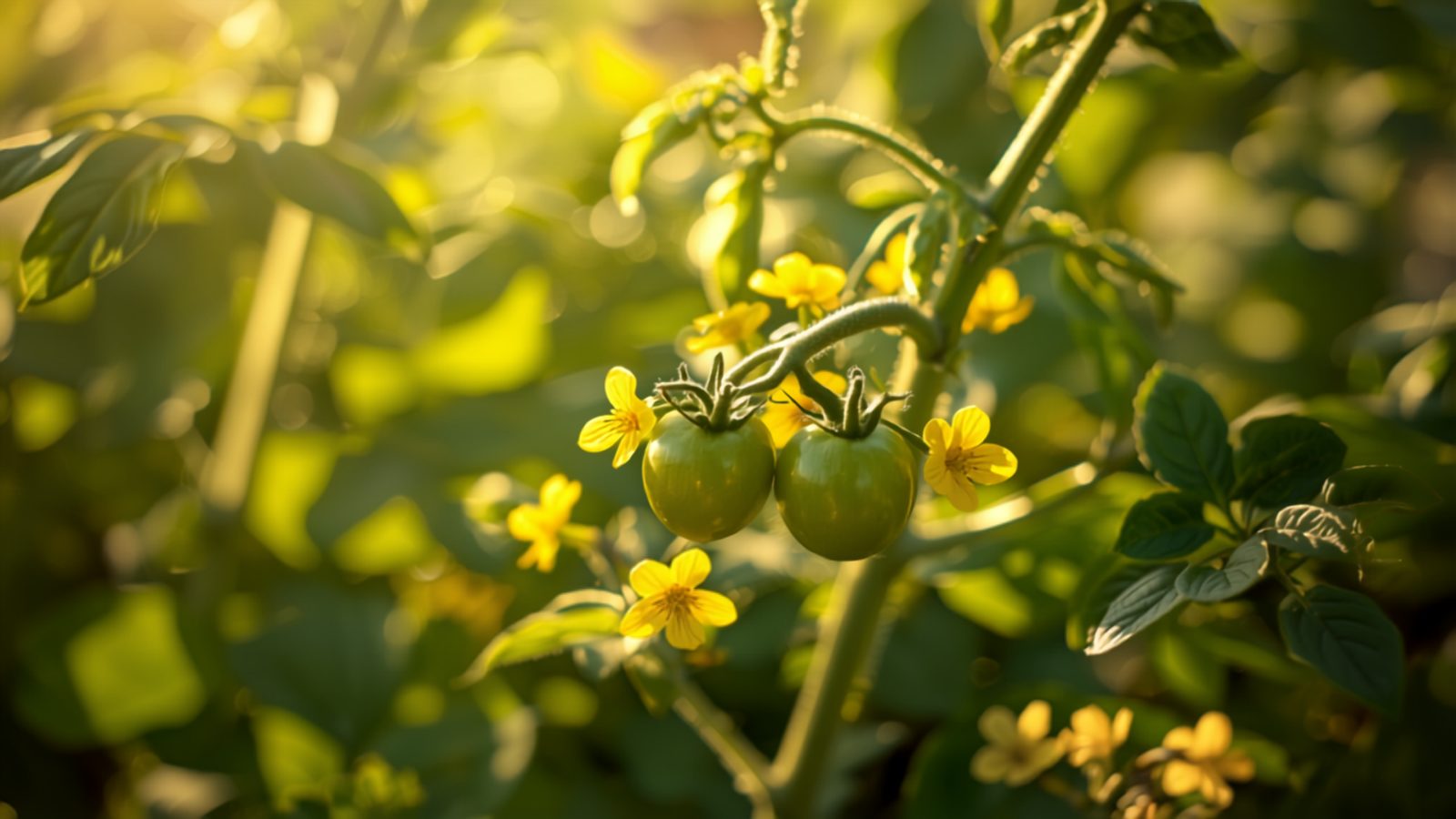
If your tomato plants look healthy and covered in blooms but the fruit count isn't matching the flower count, you're not doing anything wrong. University of Minnesota Extension's vegetable IPM team flagged the exact same pattern in their July 30, 2026 crop update: tomatoes "slow to really put on a lot of fruit" despite steady flowering, and cucumbers showing "hundreds of flowers, but only a handful of fruit." The cause isn't disease or a watering mistake, it's a pollination failure with a specific temperature trigger, and the numbers behind it tell you exactly how much yield you're actually losing.
The Temperature Line Where Pollination Breaks Down
The extension update ties the bloom drop to a two-part threshold: daytime highs above 90°F combined with nighttime lows staying above 70°F. That combination doesn't just stress the plant, it degrades pollen viability directly and can prevent tomato flowers from releasing pollen at all. Minnesota's Crookston station spent 5 consecutive days at 100°F this stretch, part of a run that set 43 daily high-temperature records and 60 record-warm overnight lows. Layered on top of that, 95 percent of the state is now classified at least "very dry," with 75 percent in moderate drought and 35 percent in severe drought — conditions that push already heat-stressed plants to abort flowers and small fruit as a survival move, shedding what they can't support rather than risk losing the whole plant.
What a Collapsed Fruit-Set Rate Actually Costs You
Under normal conditions, a healthy tomato plant sets fruit from roughly 70 to 80 percent of the flowers it opens, since tomato blossoms are self-pollinating and don't depend heavily on outside pollinators. Run that rate against 40 open flowers in a week and you'd expect somewhere around 28 to 32 fruit. Push the same plant through the 90/70 threshold for several days and that set rate can collapse to 10 to 15 percent, which turns the same 40 flowers into just 4 to 6 fruit. That's a 75-85 percent yield loss from the exact same number of blooms — nothing wrong with pollination access, plant vigor, or watering, just pollen that never became viable in the heat.
Cucumbers run an even starker version of the same math. They rely on bees moving pollen between separate male and female flowers, and their baseline fruit-set rate is already lower, typically 20 to 30 percent of flowers under good conditions. Heat stress on top of that pushes viable pollen and bee activity down further, which is exactly how a plant ends up with "hundreds of flowers" and single-digit fruit — a rate under 5 percent instead of the 20-plus percent the plant's genetics are built for.
Time a Second Planting Around the Heat
If this week's blooms are a wash, a backward-dated succession planting can put fresh flowers into a cooler window instead. Use our seed calculator to count back from your target bloom date using each variety's real days-to-maturity.
Plan your succession planting →Stocking up? Shop gardening supplies on Amazon →As an Amazon Associate, we earn from qualifying purchases.
Timing a Second Planting Around the Heat Window
Since the failure point is pollination, not plant health, the fix isn't necessarily to nurse the current bloom flush, it's to make sure a later flush lands outside the 90/70 window. Take a fast tomato variety with a 60-day maturity window: counting back from a target bloom date roughly 45 days out (most tomato varieties start flowering 10 to 15 days before the maturity date range even begins in earnest) tells you the latest sensible sowing date for a second round timed to bloom once nights are reliably back under 70°F. The same backward count works for cucumbers, whose faster 50 to 55-day maturity gives you more room to stagger a second sowing 2 to 3 weeks behind the first without losing the season entirely.
What Actually Helps This Week
For blooms already open during the heat, hand-pollinating tomato flowers with a small brush or electric toothbrush between 8 and 10 a.m., when pollen viability is highest before the day's peak heat, can recover some of the fruit set a plant would otherwise lose. The extension update also notes heat-driven "catfacing" (scarring from incomplete pollination) turning up in strawberries this week, further evidence the driver is pollination stress rather than a crop-specific disease. For fruit that did set before the heat hit, the same update recommends harvesting climacteric crops like cantaloupe, tomatoes, and melons slightly early and letting them finish ripening off the vine, ahead of the heavy rainfall that tends to follow extended heat stretches and split fruit still on the plant.
Source: University of Minnesota Extension — Weekly Vegetable Update, July 30, 2026, https://blog-fruit-vegetable-ipm.extension.umn.edu/2026/07/weekly-vegetable-update-july-30-2026.html
Quick Recap
- Daytime highs above 90°F combined with nights above 70°F degrade pollen viability and can stop tomato flowers from releasing pollen entirely.
- Normal tomato fruit set runs 70-80% of flowers; under this threshold it can collapse to 10-15%, a 75-85% yield loss from the same bloom count.
- Cucumbers, already lower-set at 20-30% normally, can drop under 5% during the same heat stretch.
- A backward-dated second planting, timed via days-to-maturity to bloom after nights drop back under 70°F, recovers yield the current flush can't.
- Hand-pollinating tomato blooms in the cooler 8-10 a.m. window can salvage some fruit set while the heat lasts.
A plant loaded with blooms and light on fruit isn't a mystery once you separate flowering from fruit set — the first is about plant vigor, the second is a pollen-viability problem with a hard temperature line. Track that line, plant a second flush to land on the other side of it, and the same garden that looked stalled this week can still close out the season on target.
Gearing up for your next project? Browse gardening tools & supplies on Amazon →As an Amazon Associate, we earn from qualifying purchases. Opens on Amazon.com in a new tab.