Garlic Planting Season Is Here: The Clove-Count Math for How Many Bulbs to Buy
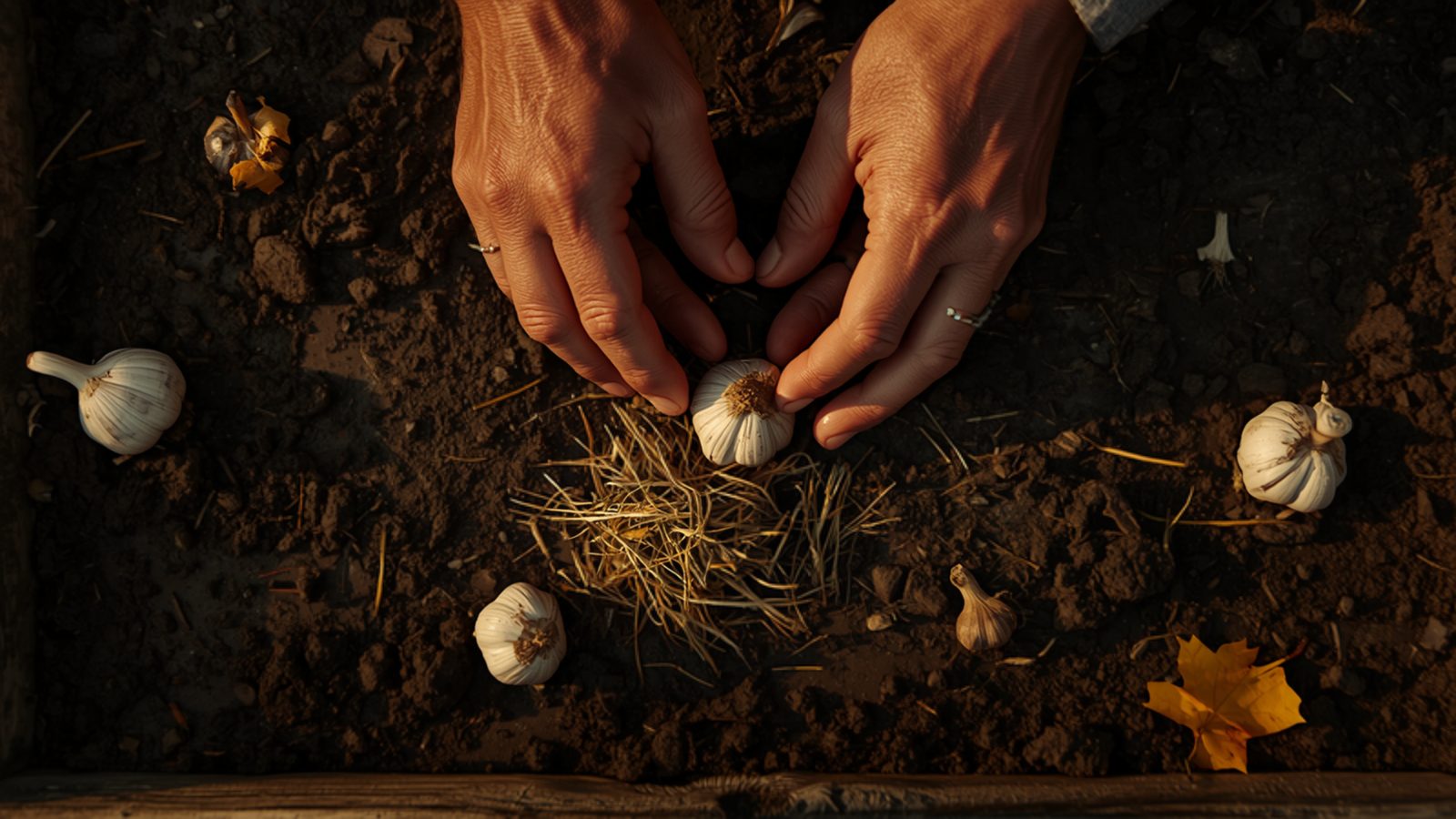
Garlic season is officially open. On a September 29 segment for KEYC News in Mankato, Minnesota, Blue Earth County Master Gardeners Kimberly Nielsen and Joyce Wilcox laid out their fall planting calendar: get unpeeled garlic cloves in the ground, pointed end up, sometime between mid-October and Halloween, set them about three times as deep as the clove is tall, and expect to dig the harvest around the Fourth of July. They also recommended buying named seed garlic, such as the hardneck variety Music, over cloves from the grocery store. It is good, simple advice. What it leaves for you to work out is the part that decides whether you end up with too much garlic or not enough: how many cloves your bed holds, how many bulbs that means buying, and how much of next summer's harvest to hold back so you never have to buy seed again.
Step One: Turn Your Bed Into a Clove Count
Garlic is one of the easiest crops to plan on paper because of a single fact: every clove you plant becomes one bulb. There is no thinning, no germination rate to pad for, and no guessing about how many plants a seed packet will produce. The count you plant is, give or take a few losses, the count you harvest.
The University of Minnesota Extension spaces cloves 6 inches apart, and the Farmers' Almanac's fall 2026 garlic guide gives a 4 to 6 inch range. On a 6-inch grid in a raised bed, the formula is just the bed dimensions in inches divided by 6. For a 4-by-8-foot bed, starting 3 inches in from each edge, that is 48 ÷ 6 = 8 cloves across and 96 ÷ 6 = 16 cloves along the length, for 128 cloves. Tighten to 5 inches and the same bed takes roughly 9 by 19, or about 170. Every inch you take off the spacing adds a lot of plants, but it also shrinks the room each bulb has to size up, so 6 inches is the sensible default unless your space is tight.
In-ground gardeners can use the Extension's row layout instead: double rows with cloves 6 inches apart, the two lines 6 inches apart, and the double rows centered 30 inches from each other. Each 10 feet of double row holds 20 cloves per line, or 40 cloves total.
Step Two: Turn the Clove Count Into a Bulb Order
Seed garlic is sold by the bulb or the pound, not the clove, which is where most orders go wrong. Clove counts vary a lot by variety, so before you order a big batch, check the seller's listing or break apart one bulb you already have and count only the plump outer cloves. The skinny cloves near the center grow skinny bulbs, and they are better used in the kitchen.
Then divide. If your seed bulbs average 6 good cloves, the 4-by-8 bed needs 128 ÷ 6 = 21.3, which rounds up to 22 bulbs. Add a couple extra to cover a bulb or two that turns out soft or undersized, and you are at about 24. If your variety averages 10 usable cloves, the same bed needs only 13 to 15 bulbs. That is nearly a 40 percent difference in what you spend for the exact same bed, which is why the clove count per bulb is the number to pin down before you check out.
Work Out Your Planting Count
Plug your bed size and spacing into the Seed Calculator to get a plant count for garlic or any other crop you are putting in this fall, then divide by cloves per bulb for your order.
Open the Seed Calculator →Starting seeds for this plan? Compare seed-starting trays, seed-starting mix, and seedling heat mat on Amazon.
GardeningMath may earn a commission from qualifying purchases made through affiliate links, at no additional cost to you.
Step Three: Pick the Date From Your Frost, Not the Calendar
The Master Gardeners' mid-October to Halloween window is tuned for south-central Minnesota. The University of Minnesota Extension frames the same advice in a way that travels: plant one to two weeks after the first killing frost. That is the more useful rule because it is anchored to your own weather instead of a date on the calendar. The goal is to get roots growing in soil that is still workable without giving the clove enough warmth to push a lot of green growth before winter.
The math is a simple add. If your first killing frost lands on October 8, your planting window is October 15 to 22, which sits right inside the Minnesota calendar range. If it lands in late September, as it did across northern Wisconsin this year (we ran the cover-or-harvest numbers for that frost last week), you could be planting in early October. Farther south the window moves later: the Almanac's guide cites mid- to late October for the Mid-Atlantic, late September through November for the Southeast, and mid-October all the way into January for mild coastal areas.
Step Four: Depth, by Two Rules That Mostly Agree
The Master Gardeners' rule is relative: dig to three times the height of the clove. The Extension's rule is absolute: set the base of the clove 2 to 3 inches below the soil surface. For a typical 1-inch clove, both land in the same place, a hole about 3 inches deep. For an unusually large 1.5-inch clove, the three-times rule says 4.5 inches. In that case we would treat the Extension's 3 inches to the base as a practical ceiling. That still leaves the tip about an inch and a half under the soil, with the winter mulch covering it from there.
Step Five: Mulch Volume and the Nine-Month Bed
Once the cloves are in, the Extension recommends covering the bed with 3 to 4 inches of leaf or straw mulch, then pulling it back in spring after the threat of hard freezes has passed. The volume is area times depth: a 32-square-foot bed at 3 inches needs 32 × 0.25 = 8 cubic feet, and at 4 inches about 10.7 cubic feet. If you are raking your own leaves, collect more than that, because loose leaves settle a lot over winter.
The other number to plan around is time. A bed planted in mid-October and dug around July 4 is occupied for about nine months, so it is gone for your spring lettuce and peas. The upside is that it frees up in early July with enough season left in most places for a succession crop of bush beans or fall greens. Pencil both crops in now, not next June.
The Payoff: Never Buying Seed Garlic Again
Here is where the one-clove-one-bulb math really pays off. Plant 128 cloves this October and, with good survival, you dig roughly 128 bulbs next July. To replant the same bed, you need the same 22 or so bulbs you bought this year. Set aside the biggest ones, as the Extension advises, and that works out to 22 ÷ 128, or about 17 percent of the harvest, roughly one bulb in six. The other five in six go to the kitchen. After one season of buying, the bed keeps itself going, and because you keep saving the largest bulbs, your seed stock tends to get better suited to your own garden year after year.
Source: KEYC News — Lisa Kaye, "Master Gardeners share fall tips for saving seeds, planting garlic and bulbs," September 29, 2026, https://keyc.com/2026/09/29/master-gardeners-share-fall-tips-saving-seeds-planting-garlic-bulbs. Spacing, depth, timing, and mulch guidance: University of Minnesota Extension, "Growing garlic in home gardens," https://extension.umn.edu/vegetables/growing-garlic. Regional planting windows: Farmers' Almanac, "Is It Time to Plant Garlic Where You Live? A Regional Fall 2026 Guide," https://www.farmersalmanac.com/is-it-time-to-plant-garlic-where-you-live-a-regional-fall-2026-guide. Bed sizes, clove counts per bulb, and dates in the worked examples are illustrative.
Quick Recap
- One clove makes one bulb, so your planting count is your harvest count.
- A 4-by-8-foot bed at 6-inch spacing holds 128 cloves. An in-ground double row holds 40 cloves per 10 feet.
- Bulbs to buy = cloves needed ÷ good cloves per bulb, plus a couple spare. Count the cloves before you order.
- Plant one to two weeks after your first killing frost, at about three times clove height, with the base no more than about 3 inches deep.
- Mulch 3 to 4 inches deep (8 to 11 cubic feet per 4-by-8 bed), and plan for the bed to be busy until early July.
- Save about one bulb in six, the biggest ones, and you can replant the same bed every year without buying more seed garlic.
Garlic asks for a few minutes of planning in October and very little after that. Get the clove count right now and next summer's harvest is basically already decided.