Wisconsin's First Frost Just Arrived: The Math on Whether to Cover, Harvest, or Let It Go
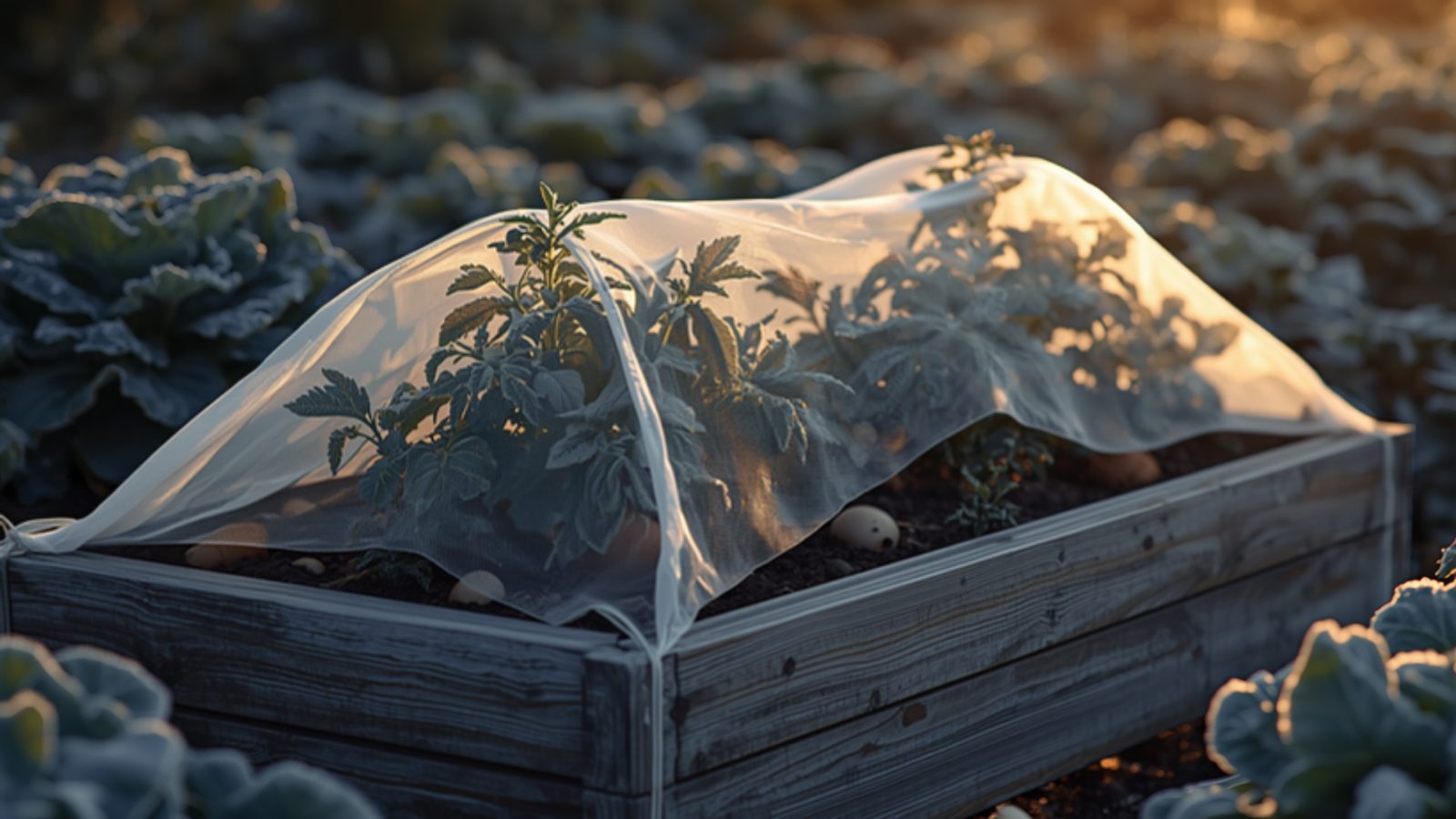
The first frost of the 2026 season showed up on schedule this week. The National Weather Service put eight far northern Wisconsin counties, Ashland, Bayfield, Burnett, Douglas, Iron, Price, Sawyer, and Washburn, under frost advisories for Monday night, September 21, with lows forecast to reach as cold as 31°F in the far north and 37°F in Rhinelander, according to the Milwaukee Journal Sentinel. A Green Bay meteorologist added that first frosts could reach other parts of the state over the next few weeks. If you garden anywhere across the northern tier, that is your cue. But "frost is coming" is not a plan. The useful question is narrower: which of your plants can a cover actually save tonight, and is the harvest you would protect worth the trouble?
Frost Is Not the Threshold. Know the Real Numbers
Weather alerts use two different lines, and they mean different things for a garden. A frost advisory goes out when temperatures are expected to fall into the 33 to 36°F range, cold enough for ice to form on exposed leaves even though the air stays above freezing. A freeze warning goes out at 32°F and below. Iowa State University Extension adds two more numbers worth writing on the back of your hand. First, cool-season crops such as kale, cabbage, and carrots generally shrug off temperatures down to 28°F, sometimes 26°F, with little damage. Second, once temperatures fall below about 28°F, covering tender plants typically stops working. Duration matters too: five or more hours below freezing can cause damage even above 28°F.
That gives you three zones for any given night. Above 32°F, a cover on tender crops is cheap insurance. Between 28 and 32°F, a cover is the difference between keeping and losing tomatoes, peppers, basil, beans, and squash. Below 28°F, harvest the tender crops in the afternoon and let the plants go, because no bedsheet is going to carry them through.
The Cover Math: Forecast Low Plus Fabric Gain
A row cover works by holding in heat the soil releases overnight, so each fabric weight buys a rough number of degrees. University of Maryland Extension puts medium-weight covers, 0.5 to 1.0 ounce per square yard, at 4 to 6°F of frost protection, and heavy covers, 1.5 to 2.2 ounces, at up to 8°F. So the quick calculation is: forecast low plus the fabric's gain equals the temperature your plants actually experience.
Run it for Monday's numbers. A 31°F forecast under a medium cover, taking the conservative end at 4°F, puts the plants around 35°F. That is chilly but above the ice line, and tomatoes come through fine. The same forecast with no cover leaves them at 31°F, where the leaves blacken by morning. Now try a 27°F night. Even the 8°F heavy cover only lifts the plants to about 35°F on paper, but that forecast sits below the 28°F point where Iowa State says covering stops being dependable, and a forecast is an estimate, not a promise. On a night like that, pick first and cover second, and treat anything that survives as a bonus.
Why One Night Is Often Worth Saving
The reason to bother at all is timing. Iowa State notes that an early freeze in late September or early October is often followed by a week or more of warmer weather. That pattern changes the payoff. Suppose you have four tomato plants each still carrying 12 full-sized green fruit. If a single cold night kills the plants, the green fruit you pick in a hurry is all you get. If a cover carries the plants through, every mild day that follows gives more of those 48 fruit time to color on the vine. Even if only a third of them finish, that is 16 ripe tomatoes for one sheet of fabric and ten minutes of work. The math flips once the forecast shows several frosty nights in a row, because every extra night is another chance for the cover to fail and another round of work for a shrinking crop.
A simple rule follows from that. Cover when the forecast shows one or two cold nights and then a warm-up. Harvest and pull when the extended forecast shows the cold settling in for good.
Put the Beds to Bed Once the Frost Wins
When the tender crops are done, a winter mulch layer protects the soil you spent all season building. The Mulch Calculator turns your bed dimensions and depth into the exact volume to buy.
Calculate your mulch →Mulching beds for this? Compare wheelbarrow, bow rake, and landscape fabric on Amazon.
GardeningMath may earn a commission from qualifying purchases made through affiliate links, at no additional cost to you.
Sizing the Cover So It Actually Works
The most common cover mistake is using a piece that is too small. A cover only traps heat if it reaches the ground on every side, because the warmth it holds is coming up out of the soil. A sheet that rests on top of the plants and stops short of the dirt lets that heat drain away. The sizing formula is straightforward: cover width equals bed width plus twice the plant height, and cover length equals bed length plus twice the plant height, plus a little extra to weigh down at the edges.
For a 4-by-8-foot raised bed with tomatoes caged at 4 feet tall, that is 4 + (2 × 4) = 12 feet wide and 8 + (2 × 4) = 16 feet long, before any tuck margin. That is a lot more fabric than most people guess, and it explains why an old twin sheet over a full tomato bed so often fails. A bed of low crops such as bush beans or peppers at 18 inches tall needs only about 7 by 11 feet. Measure before the forecast turns, because cold nights are a bad time to discover your frost cloth is 4 feet short.
Where Your Date Falls on the Curve
Monday's frost was not early. The Journal Sentinel notes that the average first frost falls on September 23 in Rhinelander and September 30 in Superior, so this week's cold arrived within days of normal for the region. That is a useful reminder about what an "average" first frost date means: in plenty of years, the frost comes before that date, not after it. If you plan your fall garden around the average date as though it were a guarantee, you are giving yourself roughly even odds of getting caught. Build in a buffer of a week or two on the early side, and keep the frost cloth where you can reach it from the first of the month in which your average falls.
Source: Milwaukee Journal Sentinel — Caden Perry, "Wisconsin set for first frost of 2026. What it means for your garden," September 21, 2026, via Yahoo News, https://www.yahoo.com/news/weather-news/articles/wisconsin-set-first-frost-2026-200631185.html. Temperature thresholds: Iowa State University Extension, "How to Protect Plants from Frost and Freeze," https://yardandgarden.extension.iastate.edu/how-to/how-protect-plants-frost-and-freeze. Row cover protection ratings: University of Maryland Extension, "Row Covers," https://extension.umd.edu/resource/row-covers. Worked examples on this page are illustrative.
Quick Recap
- Frost advisories cover 33 to 36°F, freeze warnings 32°F and below. Cool-season crops usually tolerate 28°F; tender crops do not.
- Forecast low plus cover gain is your plants' real temperature: medium covers add 4 to 6°F, heavy covers up to 8°F.
- Below about 28°F, covers are no longer dependable, so harvest tender crops that afternoon.
- Cover for one or two cold nights followed by a warm-up. Pull the plants when the cold is settling in to stay.
- Size the cover as bed dimension plus twice the plant height on each axis, and make sure it touches the ground all around.
The first frost always feels like the end of the season, but the numbers say it is usually just a first warning. A little arithmetic on the forecast and a big enough piece of fabric can buy you a couple more weeks of harvest, and when the math stops working, it tells you that too.