Drought Cut Texas Pumpkin Yields 30-40% Despite Drip Irrigation: The Subsoil Water Math to Do This Fall
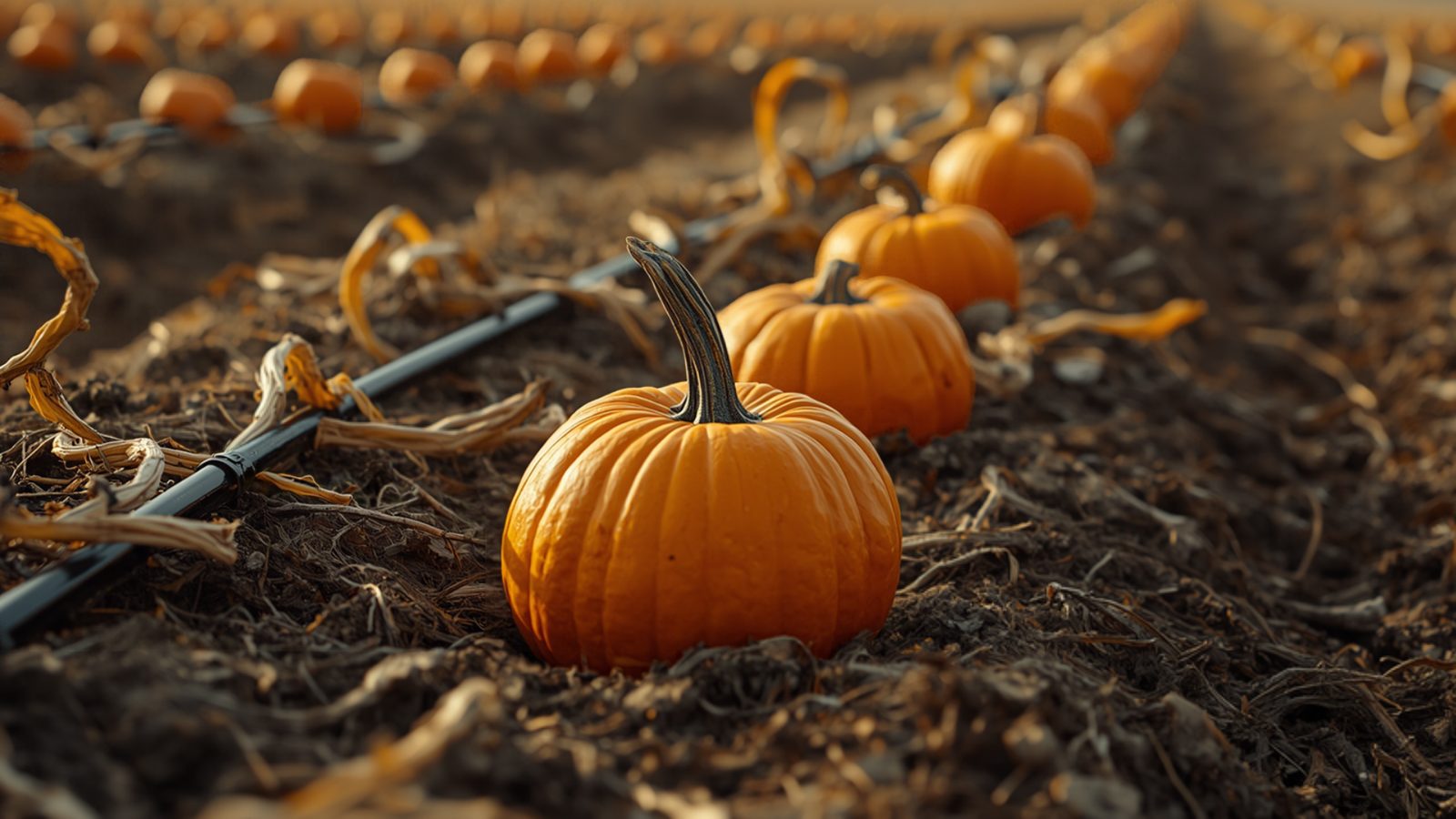
Texas pumpkin growers just finished one of their roughest seasons in recent memory. In an October 6 report from Texas A&M AgriLife, Floyd County Extension agent Mark Carroll put the drought-driven yield loss at 30 to 40 percent across the state's roughly 1,200 acres of pumpkins. Floyd County, east of Lubbock, is the center of Texas pumpkin country, and Carroll called 2026 the driest year he has seen in two decades on the job. Harvest wrapped up a week or two ahead of normal simply because there was less to pick.
The detail that matters most for home gardeners is not the drought itself. It is that every one of those acres was irrigated, mostly with drip lines, and it still was not enough. Carroll's explanation was that the crop went into the season with no subsoil moisture. The water the growers added could keep plants going, but it could not make up for a soil profile that was empty to begin with. That is a lesson you can act on in your own garden right now, because fall and winter are when the subsoil gets refilled, or doesn't.
Why Drip Couldn't Make Up the Difference
Think of the soil under a bed as two tanks. The top few inches are the small tank your hose or drip line fills every few days. Below that is the big tank: the deeper soil that big, long-season plants like pumpkins and winter squash root into during the hot middle of summer, when the surface dries out between waterings. In a normal year, that big tank gets filled by fall rain and winter snowmelt, and plants draw on it all summer without you ever thinking about it.
Drip irrigation is efficient precisely because it puts a modest amount of water in a narrow strip near the plant. That is great for keeping the small tank topped off. It is a poor tool for filling the big one, because the volume is small and the wetted zone is narrow. When the big tank starts the season empty, the plant is living almost entirely off whatever you add each week, and in a hot, dry summer that budget runs short. Smaller fruit and early ripening, both of which Texas growers reported, are what you would expect from plants that ran out of reserve water.
Step One: How Much Water Your Soil Can Hold
The size of the big tank depends on your soil texture. The University of Nebraska-Lincoln's irrigation course lists the available water capacity, the water held in soil that plant roots can actually use, in inches of water per foot of soil depth:
- Coarse sand: 0.25 to 0.75 inches per foot
- Fine sand: 0.75 to 1.00
- Fine sandy loam: 1.50 to 2.00
- Silt loam: 2.00 to 2.50
- Silty clay loam: 1.80 to 2.00
- Clay: 1.20 to 1.50
Multiply by the depth you want to refill. For a vegetable bed, 2 feet is a reasonable planning depth for deep-rooted summer crops. A fully dried-out silt loam at 2 feet needs 2 × 2.0 to 2 × 2.5, or 4 to 5 inches of water, to fill back up. A fine sandy loam needs 3 to 4 inches. A coarse sand needs only 0.5 to 1.5 inches, which sounds like good news until you remember that it also empties that fast in July. (We go deeper on how texture changes your watering in watering clay vs. sandy soil.)
Step Two: Convert Inches Into Gallons
One inch of water over one square foot is 0.623 gallons. So the refill volume for a bed is: square feet × inches needed × 0.623.
For a 4-by-8-foot bed (32 square feet) on silt loam that needs 4 inches: 32 × 4 × 0.623 = about 80 gallons. At 5 inches it is about 100 gallons. A 10-by-20-foot in-ground plot at 4 inches needs 200 × 4 × 0.623, or about 500 gallons. Those are big numbers compared with a typical summer watering, which is the whole point: you cannot sneak this amount in a quarter-inch at a time.
Turn Inches Into a Real Schedule
Use the Watering Schedule calculator to convert your bed size and target inches of water into gallons and run times, whether you are refilling the soil this fall or planning next summer's routine.
Open the Watering Schedule Calculator →Setting up watering for this? Compare drip irrigation kit, hose timer, and soil moisture meter on Amazon.
GardeningMath may earn a commission from qualifying purchases made through affiliate links, at no additional cost to you.
Step Three: Subtract What Fall Rain Already Delivered
You only need to add the difference between what the soil can hold and what it already has. Two ways to estimate that:
The rain gauge method. Add up the rain since your garden soil was last dry well below the surface, usually late summer in a drought year, and subtract it from the refill target. If your silt loam bed needs 4 inches and you have had 1.5 inches of soaking rain since then, the deficit is about 2.5 inches, or 32 × 2.5 × 0.623 = 50 gallons for the 4-by-8 bed. Light showers under a quarter-inch barely count, since most of that evaporates before it soaks in. (Our post on converting rainfall into irrigation credit walks through that discount.)
The shovel method. Dig a narrow hole 12 to 18 inches deep in the middle of the bed and squeeze a handful of soil from the bottom. If it holds together in a ball and leaves your palm damp, the deep soil has water. If it crumbles dry, the big tank is still low and it is worth refilling before the ground freezes.
Step Four: Put It In Slowly
Dumping 80 gallons on a bed in one go mostly creates runoff, especially on clay. Split the deficit into roughly 1-inch applications, which is about 20 gallons per 4-by-8 bed, and let each one soak in for a few days before the next. A soaker hose or a slow-running hose moved around the bed works better here than drip, for the same reason drip struggled in Texas: you want the whole bed wet, not just a strip.
Timing matters too. Do the refill while the soil is still unfrozen, and after the bed is cleared or the fall crops are planted. Then cover the bed with mulch so less of it evaporates over winter. A 3-inch layer on a 4-by-8 bed is 8 cubic feet; our mulch calculation guide handles other bed sizes.
When You Can Skip It
If your area gets reliable fall and winter rain or snow that adds up to more than your refill target, nature will usually handle it and this step is optional. The math matters most in the places that had a dry summer and a dry start to fall, which this year includes a lot of gardens beyond West Texas. The cost is a few hundred gallons of water now. The payoff, if Texas is any guide, is the difference between plants that can ride out a hot July on stored water and plants that are living week to week.
Source: Texas A&M AgriLife Today — Karn Dhingra, "Drought conditions cut Texas pumpkin yields," October 6, 2026, https://agrilifetoday.tamu.edu/2026/10/06/drought-conditions-cut-texas-pumpkin-yields/. Available water capacity values: University of Nebraska-Lincoln, "Irrigation Chapter 3 - Soil Water," Table 3.1, https://passel2.unl.edu/view/lesson/bda727eb8a5a/3. Bed sizes, rainfall totals, and the 2-foot refill depth in the worked examples are illustrative.
Quick Recap
- Texas pumpkin yields fell 30 to 40 percent this year even with irrigation, because the season started with dry subsoil.
- Drip keeps the surface tank topped off but is a poor tool for refilling deep soil.
- Refill target = available water capacity (inches per foot) × depth in feet. Silt loam at 2 feet needs 4 to 5 inches.
- Gallons = square feet × inches × 0.623. A dry 4-by-8 silt loam bed needs about 80 gallons.
- Subtract soaking fall rain or check with a shovel, then apply the rest in roughly 1-inch doses before the ground freezes, and mulch.
Most garden watering math is about getting through next week. This is one of the few calculations that sets up the whole next season, and it works best when you do it before winter.