Water Restrictions Hit 70% of France: The Math on What a Restricted Watering Window Actually Costs You
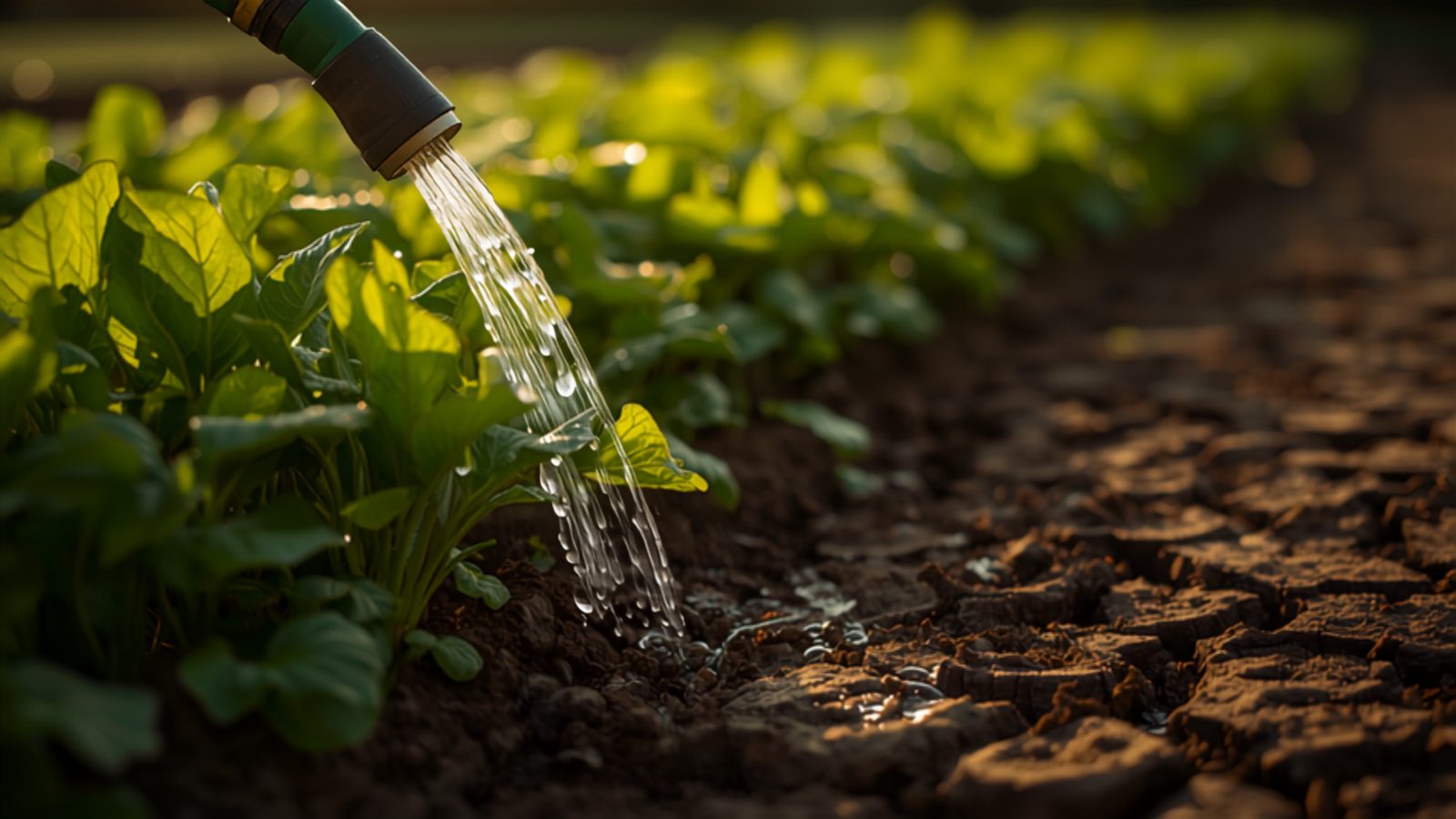
Nearly 70 percent of France is now under water-use restrictions, with 67 of the country's 101 départements at the highest alert grade after a July that ranked as the hottest ever recorded there and the third-driest on record, with rainfall running nearly 70 percent below normal. Two-thirds of the aquifers that supply French drinking water have dropped below normal levels, and more than 30,000 people briefly lost tap water entirely in late July. Under the restrictions, home vegetable gardens can still be watered, but only between 8pm and 9am. It's the kind of rule that sounds like a real constraint until you actually run the numbers on what that window can deliver.
Why a 13-Hour Window Almost Never Is the Bottleneck
8pm to 9am is a 13-hour block, and the math on what fits inside it is more forgiving than the rule sounds. Take a 150 square foot vegetable bed at the standard 1.5 inches of water per week: 150 square feet × 1.5 inches × 0.623 gallons per square-foot-inch works out to about 140 gallons for the whole week. A typical garden hose delivers roughly 9 gallons per minute, so getting that full 140 gallons out of the hose takes under 16 minutes — total, for the entire week, not per session. Even a modest drip zone running at a combined 40 gallons per hour across its emitters clears the same 140 gallons in about 3.5 hours. Either way, a single overnight window swallows the actual volume with hours to spare. If you're watering by hand or with a timer-driven drip system, the hours you're allowed to use were never really the limiting factor.
The Real Constraint Is Days, Not Hours
What actually bites is when a restriction caps which days you're allowed to water at all, something plenty of U.S. municipalities do too during drought (commonly two or three fixed days per week rather than a daily window). That turns your weekly 140 gallons into two or three larger sessions instead of a spread-out routine, and the gap between sessions is where the real risk lives. Divide 140 gallons across 2 allowed sessions and each one needs to deliver 70 gallons on its own — still an easy volume for a hose or drip zone to hit inside a single evening, but the soil now has to hold that water for roughly 3 to 3.5 days between sessions instead of the 1 to 2 days a normal rotation would use.
Rebuild Your Schedule Around Fewer Allowed Days
If your area caps watering to specific days, plug your bed size and crop mix into our watering schedule tool to see exactly how much each of those sessions needs to deliver.
Calculate your restricted-day schedule →Where the Interval Gap Actually Hurts
Not every crop feels a 3-day gap the same way. Deep-rooted, direct-seeded plants can draw on moisture several inches down and generally tolerate a longer stretch between waterings without much stress. Shallow-rooted transplants are a different story: their roots sit mostly in the top few inches of soil, which can dry out within a day or two in hot weather even when the week's total water was technically enough. A restriction that forces sessions 3 to 3.5 days apart can leave those plants running on empty for the back half of that stretch, regardless of how generous the allowed hours were.
Closing the Gap With Mulch
A 2 to 3 inch mulch layer is the cheapest way to stretch a session further, since it cuts evaporative water loss from the soil surface by roughly a third to half compared to bare soil. If bare, unmulched soil in a hot bed typically stays adequately moist for about 2 days after a deep watering, a mulched bed in the same conditions commonly holds that moisture closer to 3 days — nearly closing the gap created by a 2-day-per-week restriction. It won't rescue a bed under a genuinely severe rule, but for the day-count restrictions most home gardeners are likely to actually face, mulch is often the difference between a schedule that works and one that doesn't.
Source: The Local (France) — "Drought forces water restrictions across nearly 70 percent of France," August 11, 2026, https://www.thelocal.fr/20260811/drought-forces-water-restrictions-across-nearly-70-percent-of-france
Quick Recap
- Nearly 70% of France is under water restrictions, with vegetable garden watering limited to an 8pm–9am window as of August 2026.
- A 13-hour nightly window can deliver a typical 150 sq ft bed's full weekly water total (about 140 gallons) in well under an hour by hose or drip — hours are rarely the real bottleneck.
- Restrictions that cap watering to 2–3 fixed days per week are the ones that matter, since they stretch the gap between sessions to 3 or more days.
- Shallow-rooted transplants feel that gap hardest, since their root zone can dry out well before the next allowed session.
- A 2–3 inch mulch layer cuts evaporative loss enough to stretch safe soil moisture from roughly 2 days to roughly 3, closing much of the gap a day-restricted schedule creates.
A restricted watering window sounds like a hard limit, but for most home garden sizes, the hours themselves rarely run out. What actually forces a rethink is a cap on watering days, and that's a math problem you can solve in advance — by dividing your bed's real weekly total across whatever sessions you're actually allowed, and using mulch to stretch the gap the rest of the way.