Cover Crop Seeding Rates Are Published Per Acre. Here's the Math for Your Raised Bed
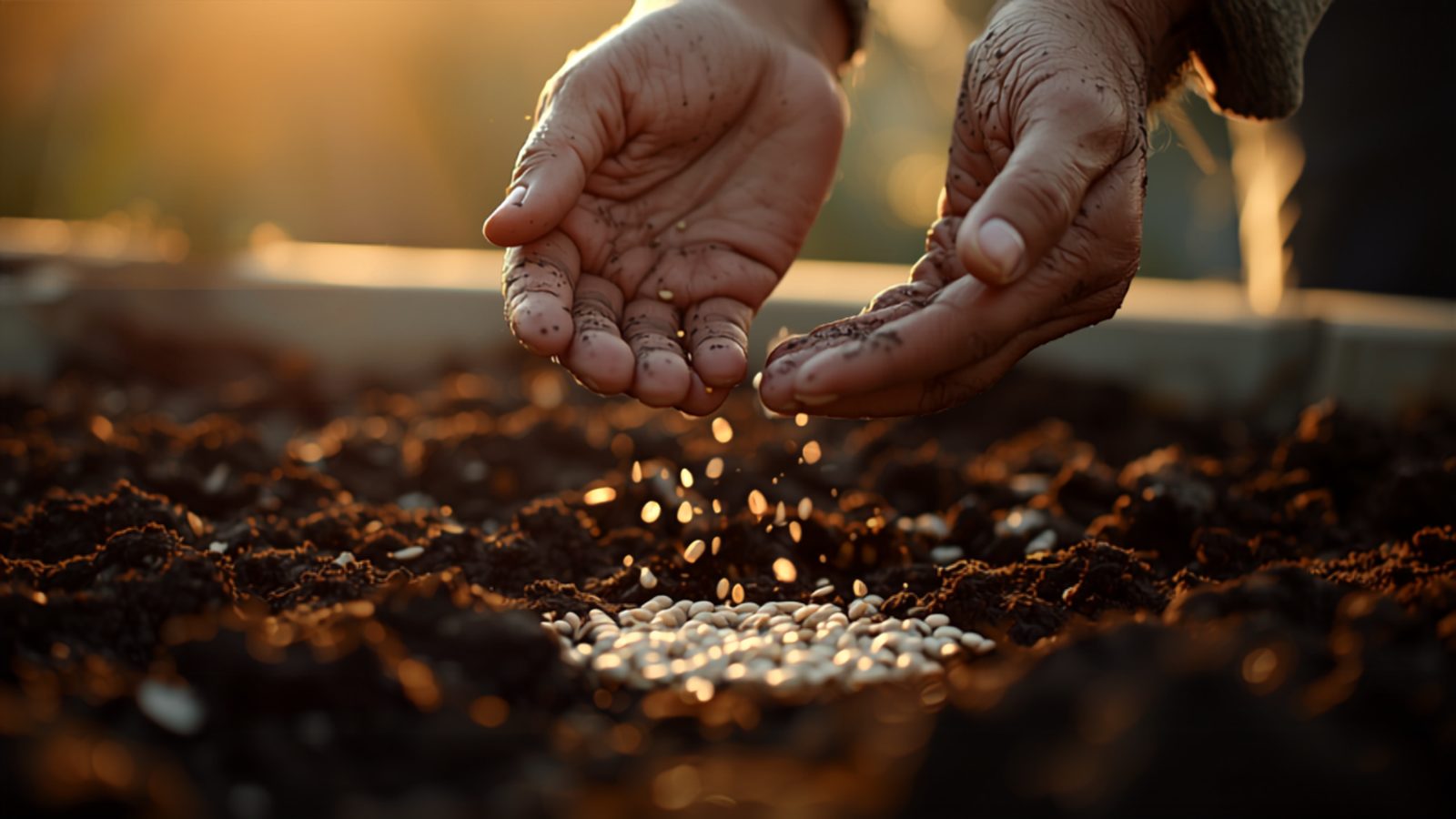
University of Minnesota Extension's vegetable IPM team put out its fall cover-crop guidance this week, and it's a reminder of a problem every backyard gardener runs into every September: the seeding rates on the bag, and in every extension bulletin, are written for a farmer with a drill seeder and a field measured in acres. An acre is 43,560 square feet. A raised bed is 32. Do the division wrong, or skip it entirely and eyeball a handful into a 4x8 box, and you end up with either a bald patch that erodes all winter or a mat so thick the seedlings choke each other out before frost. The extension numbers are correct; they're just in the wrong unit for what most of us are planting.
The Rates as Published
The update, from Extension educators Natalie Hoidal and Marissa Schuh, lays out rates for the two most common fall cover crop families. Oats run 30 to 50 pounds per acre, and field peas run 30 to 90 pounds per acre, with the lower end of each range meant for drilled seed and the higher end for broadcast seeding, since scattering seed by hand or spreader always wastes more to uneven placement than a drill does. Crucifer cover crops, radish and mustard mixes mainly, sit far lower: citing Cornell research, the update puts the optimal rate at roughly 6 pounds per acre, which it also converts to 2.5 ounces per 1,000 square feet, or about one teaspoon per square yard. That last conversion is the one worth paying attention to, because it's the extension office doing exactly the unit conversion a backyard gardener needs, just stopping one step short of bed-sized numbers.
Running the Numbers Down to Bed Scale
Start with the crucifer rate, since the extension update already did half the work. Six pounds per acre is 96 ounces per acre (16 ounces to the pound), and dividing that by 43.56 (the number of 1,000-square-foot units in an acre) lands just under 2.2 ounces per 1,000 square feet, close enough to the published 2.5-ounce figure that the difference is almost certainly a built-in margin for the same broadcast-loss problem that widens the oats and peas ranges. Push that down further to a standard 4-by-8 raised bed, 32 square feet, and the math comes out to roughly 0.07 ounces, a quantity no kitchen scale reads reliably. This is exactly why the extension update's teaspoon-per-square-yard version exists: a 4x8 bed is close to 3.5 square yards, so three and a half level teaspoons, broadcast evenly and raked in, gets you in the right range without needing a scale at all.
Oats and Peas at Bed Scale
Oats and peas scale the same way, just with bigger numbers because the per-acre rate is higher. Take the midpoint of the oats range, 40 pounds per acre: divide by 43,560 and multiply by your bed's square footage, and a 4x8 bed needs about 0.47 ounces, call it a scant tablespoon. Peas need more seed per square foot since the seeds themselves are so much larger; broadcasting toward the upper part of their 30-90 pound range, around 70 pounds per acre, works out to about 0.82 ounces for that same bed, just under two tablespoons. For a mix of the two, the extension update's guidance is to cut each component to roughly half its single-species rate rather than adding the full rate of both, since oats and peas seeded together are already competing for the same light and root space a single species would otherwise have to itself, and full rates of both would produce a canopy so dense neither crop would fill out properly. Half of each, mixed and broadcast together, gets you the same coverage two species were meant to split.
Convert Any Seeding Rate to Your Bed Size
Broadcast rates are straight multiplication. If you’re sowing a crop in rows instead, the seed calculator turns bed size, spacing, and germination rate into a seed count.
Calculate a row-sown seed count →Starting seeds for this plan? Compare seed-starting trays, seed-starting mix, and seedling heat mat on Amazon.
GardeningMath may earn a commission from qualifying purchases made through affiliate links, at no additional cost to you.
Why the Window Matters as Much as the Rate
The extension update also flags that early September still leaves a workable window for cover cropping, though it's closing: crops with a fast enough turnaround to establish before hard frost can still go in through October, while the window for anything needing a longer season has already passed for this fall. Getting the rate right matters more the later you seed, since a thin, uneven stand has less time to fill in canopy gaps before growth stalls for winter, and gaps in a cover crop stand are exactly where winter erosion and spring weed pressure show up first. A bed seeded at the correct per-square-yard rate in the first two weeks of September has meaningfully more established root mass by first frost than the same bed seeded correctly in mid-October, even though the seed count per square foot is identical.
Source: University of Minnesota Extension — Weekly Vegetable Update, September 3, 2026, https://blog-fruit-vegetable-ipm.extension.umn.edu/2026/09/weekly-vegetable-update-september-3-2026.html
Quick Recap
- Extension seeding rates are published per acre (43,560 sq ft); converting to bed scale requires dividing by that number, not eyeballing a handful.
- Crucifer cover crops (radish, mustard): about 6 lbs/acre, which works out to roughly one teaspoon per square yard — about 3.5 teaspoons for a 4x8 raised bed.
- Oats: 30-50 lbs/acre broadcast; at the mid-range, about a scant tablespoon for a 4x8 bed.
- Peas: 30-90 lbs/acre broadcast; at the mid-range, about two tablespoons for a 4x8 bed.
- Mixing oats and peas: use roughly half the single-species rate of each, not the full rate of both, since the two crops share the same light and root space.
- Seeding earlier in the fall window (now through mid-September) gives more time for canopy to establish before frost than the same correct rate seeded in October.
The per-acre number on a cover crop seed bag isn't wrong for a backyard bed, it's just written for a different scale. Once you've divided it down to your bed's actual square footage, a teaspoon and a kitchen measuring spoon do the same job a drill seeder does on a hundred acres.